Blog · Practice operations
How does a new matter get opened?
Intake, conflicts clearance, signature, lane. June Okafor on the four steps between a prospective client's first call and the first hour of billable work, and why an associate can collect information but cannot promise acceptance.
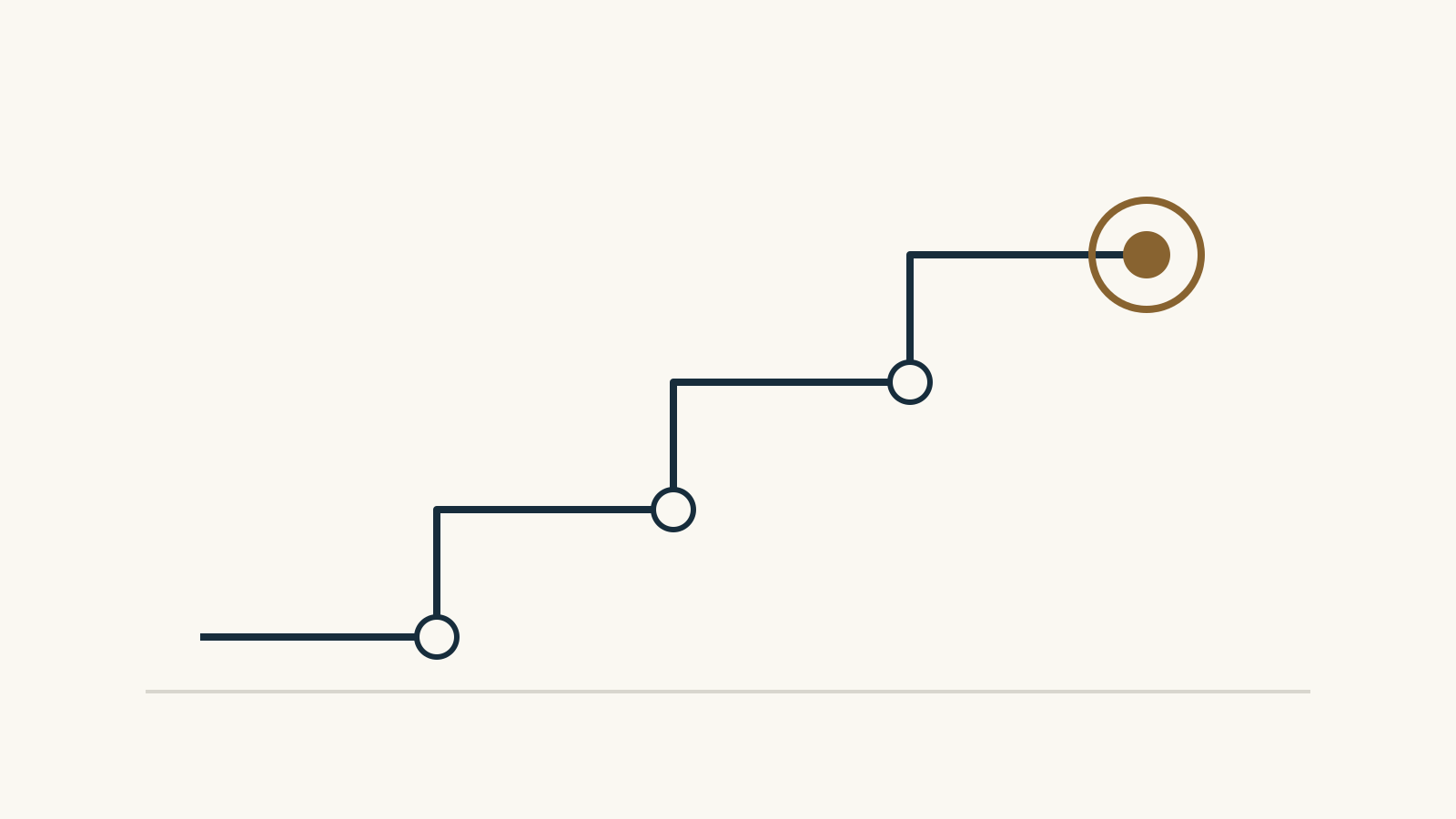
A new matter gets opened in four steps. Intake records the proposed client, related entities, the nature of the work, the requested deadline and the proposed engagement partner. Conflicts clearance follows, and Harriet Larkspur records the clearance decision and any conditions before a matter number is issued. Signature of the engagement letter comes next. Only then does the firm open the matter lane, assign its team, record the letter and confirm capacity against the statement of work. An associate may collect information at intake but cannot clear a conflict or promise acceptance.
June Okafor · Practice Manager · · 4 min read
Last updated
What does intake record?
Five fields, taken down before anyone forms a view about the work. The proposed client. Related entities, because a conflict is as likely to sit with a parent, a subsidiary or a counterparty as with the named client. The nature of the work. The requested deadline. And the proposed engagement partner.
I check for duplicate client records at this stage and send the names for conflicts review. An associate may gather all of this on a call. What an associate may not do is tell the prospective client that the firm will act.
Why can't an associate promise acceptance?
Because acceptance is a decision the firm has not yet made. Until clearance is recorded, the firm does not know whether it can act, on what conditions, or for whom. A promise made before that point is either broken later or kept at the cost of a conflict. Neither is acceptable, and neither is the associate's fault if the method was unclear. So the method is clear: collect, do not commit.
What does the client hear in the meantime?
That the firm is running its intake and clearance, and when they will hear back. Separating the client's request from the firm's acceptance is a courtesy as well as a control. Nobody is left assuming.
How does clearance work?
The names go for conflicts review. Harriet Larkspur records the decision and any conditions before a matter number is issued. An unresolved conflict stops work. The review itself stays confidential to the people handling intake, and we do not disclose another client's matter to explain a refusal. If the firm cannot act, the prospective client is told that the firm cannot act, not why in terms that would reveal someone else's business.
When is the matter number issued?
After clearance is recorded, and not before. The matter number is the first thing a time entry needs and the first thing a document is filed against, so issuing it is the moment the firm says "this is now a matter we handle." In our demo workspace Halden Foods is matter 2041 and Orrin Marine is matter 2057, each with its own restricted team.
What happens at opening?
After clearance and signature of the engagement letter, I create the matter lane, assign its team, record the engagement letter against it and confirm capacity against the statement of work. For Orrin Marine that means checking the plan of one partner at 10%, one senior at 40% and two associates at 60% over 9 weeks against named people, a step that is in progress as I write. For Halden Foods it meant recording the signed letter and its terms, and confirming the deposit; the deposit receipt is being checked against the letter now.
What sends a matter back through clearance?
Any later change in parties or scope. A new related entity, a new counterparty, a second company in the group asking to be included: each goes back through clearance before the team proceeds. Scope changes go to the engagement partner in writing. Party changes go back to the start. The order of the four steps is the method; the firm's associate exam asks candidates to put them in order for exactly that reason.
What does a good intake feel like from outside?
Quick questions, a clear "we will confirm by this date," and no promises until the firm can keep them. Clients sometimes read that as caution. It is. It is the caution that makes everything after it dependable.
What goes wrong when the order is skipped?
Each step exists because a firm somewhere learned its cost. Skip conflicts clearance and you may already be acting for the other side. Skip the signed letter and the scope exists only in memory, which is to say it exists differently in the client's memory and in yours. Skip capacity confirmation and the plan names people who are already committed elsewhere, so the first week of the matter is spent renegotiating the plan rather than doing the work.
The order also protects the associate. A new associate asked to begin work on a matter that has not cleared conflicts, or that has no signed letter, has a simple and correct answer: the matter is not yet open. Conflicts clearance, signed letter, capacity confirmation, work and review. Four steps, in that order, every time.
Q&A
The questions prospective clients and new associates ask most about opening a matter are answered below.
Last updated 1 October 2026.
Questions and answers
- What are the four steps to open a matter at Larkspur & Vance?
- Intake, conflicts clearance, signature of the engagement letter, then opening the lane with its team, letter and capacity confirmation. Work and review follow. No matter number is issued before clearance is recorded.
- What may an associate do at intake?
- Collect the proposed client, related entities, nature of the work, deadline and proposed engagement partner. An associate cannot clear a conflict or promise that the firm will accept the engagement.
- Who records a conflicts clearance decision?
- Harriet Larkspur, with any conditions, before a matter number is issued. An unresolved conflict stops work, and the review stays confidential to the people handling intake.
- What happens if the parties change after the matter opens?
- The matter goes back through clearance before the team proceeds. A scope change goes to the engagement partner in writing; a change in parties goes back to the start.
#intake #conflicts #new matter #practice management
Related articles

Practice operations
What happens when a client asks for their file back?
A file return request is one of the most ordinary things a firm handles and one of the easiest to get wrong. June Okafor walks through the firm's policy: what is returned, what is retained, and who decides the hard cases.
June Okafor · Practice Manager · · 4 min read

Practice operations
What belongs in a time entry?
A time entry is evidence, not a sales pitch. Rohan Mehta on factual narratives, why the signed letter comes before the invoice, and how a private research note and a shared methods note are billed differently.
Rohan Mehta · Tax Partner · · 4 min read

Practice operations
How do you staff a nine-week controls review?
A statement of work gives roles, allocations and a duration. June Okafor on why those are three separate fields, what a capacity check actually confirms, and why an allocation is never permission to expand the work.
June Okafor · Practice Manager · · 4 min read